How to Practise the Orchestral Clarinet at Home
The most useful way to practise an orchestral clarinet part at home is to play it with the rest of the orchestra around you, not alone. Your line was written to sit inside the whole ensemble — answering the oboe, leaning on the bassoon, waiting through long rests for a single exposed entry — so practised on its own it can feel like half a conversation. With the orchestra around you, your entries, your tuning and your timing finally have something real to meet.
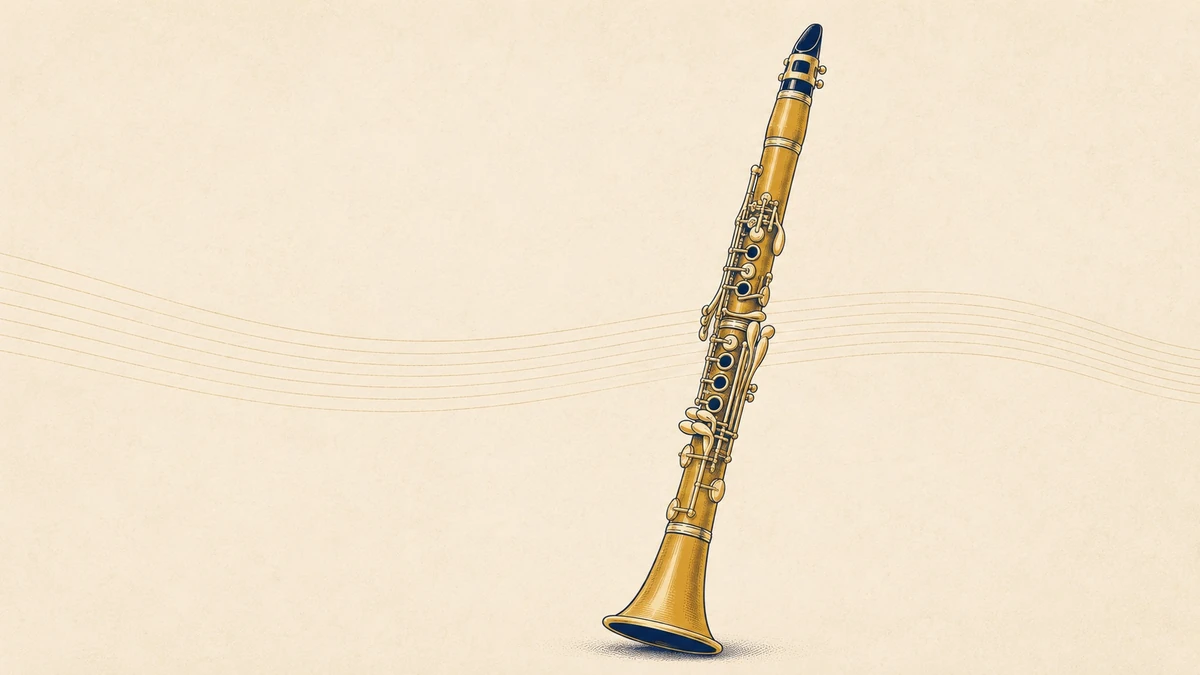
Practise the entries, not just the notes
In orchestral writing the clarinet often sits quiet for many bars, then has to come in cleanly, in tune, at exactly the right moment, and those entries are where parts most often go wrong. The difficulty is rarely the notes; it is the counting and the nerve. Practise the bars before an entry as carefully as the entry itself — know what you are listening for, which instrument hands you the line, and how the bar feels just before you come in — so you arrive ready rather than hoping. Playing along with the whole piece turns that from guesswork into something you can rehearse.
Keep the right hand down
Here is the habit most often skipped, and the one that quietly transforms a clarinet sound: hold your right-hand fingers down while you play the open throat notes — G, G-sharp, A and B-flat — especially as you approach the change of register. Those throat notes sit on a very short length of tube, which leaves them acoustically fragile, thin and quick to go sharp, and the weak throat B-flat is the worst offender. Resting the right hand in place adds tube and resonance beneath them, so they steady in pitch and take on the colour of the notes on either side rather than standing out. Spend time matching each throat note to its neighbours until the join is seamless.
Crossing the break
The break — the step from the throat notes up into the middle register — is the clarinet’s defining hurdle, and the B on the middle line of the staff, the first note over the break, is, for many players, the hardest on the whole instrument. Two things make it awkward. First, you move almost every finger at once, so practise slowly enough that they all land in the same instant; a single finger a fraction late leaves a hole open and the note squeaks. Second, the tube suddenly becomes much longer, so the note needs noticeably more air to fill it than the throat note before it. It helps to shape the inside of the mouth as if quietly saying ‘eee’, the tongue arched high, which lifts the note over the break and stops it spreading. Slow, repeated crossings — throat note to break note and back — build the move into the hand.
Build a fingering notebook of your own
No two clarinets answer quite alike, so the alternate fingerings that steady a note or smooth a passage on one instrument may behave differently on another. Keep your own written list of the ones that work on your clarinet — a steadier throat B-flat, an easier right-hand or left-hand option for an awkward corner, a cleaner approach to a difficult trill — each tried slowly against a tuner before you trust it at speed. Over time that personal toolkit lets you solve new passages without guesswork.
One clarinet, in B-flat
Every clarinet part on MaestroMeet is provided for the B-flat clarinet, the instrument almost every player already owns. Where the composer wrote for the clarinet in A, the part has been transposed for you. You will never need a second instrument to play anything in the library, and you read one consistent transposition throughout.
The question arises at all because orchestral parts have chiefly been written for two members of the family, the B-flat and the A, with composers choosing whichever suited the key of the music. In a professional orchestra you would carry both and change between them, and reading an A part remains a skill worth having. If you want it, the free reference card at maestromeet.com/cards sets out the method in full.
A word on auditions
Clarinet excerpts are chosen to test the things hardest to fake: a seamless break, even throat tones, secure intonation and clean entries after rests. A panel hears every bump across the register and every throat note that sits proud of its neighbours. Practising an excerpt as it sits in the piece, with the parts around it, rather than as a bare line, is the closest you can get at home to playing it in the room.
Related guides
More from the woodwind family: flute, oboe and bassoon. Or return to the Guides hub.
This is the kind of practice MaestroMeet was built for. You play your part with the score scrolling in front of you and the rest of the orchestra around you, so your entries, your tuning and your timing have something real to fit into. On the Premium plan you can choose which parts appear on the scrolling score — calling up the lines around you to see exactly how yours fits — and you can quiet your own line, the minus-one, so you step into the part yourself with the orchestra still playing. MaestroMeet is opening soon — join the waitlist to be among the first to play.
Join the waitlistRaise your instrument and play.
Know a clarinettist who would find this useful?
Please pass it on. The guide is free, there is nothing to sign up for, and every musician it reaches is one more reason to keep the music flowing.