How to Practise the Orchestral Bassoon at Home
The most useful way to practise an orchestral bassoon part at home is to play it with the rest of the orchestra around you, not alone. The bassoon leads a double life — anchoring the bass with the cellos and basses one moment, stepping out as a tenor or solo voice the next — and only the players around you tell you which role you are in. On its own, the line cannot tell you whether you are meant to blend or to lead.
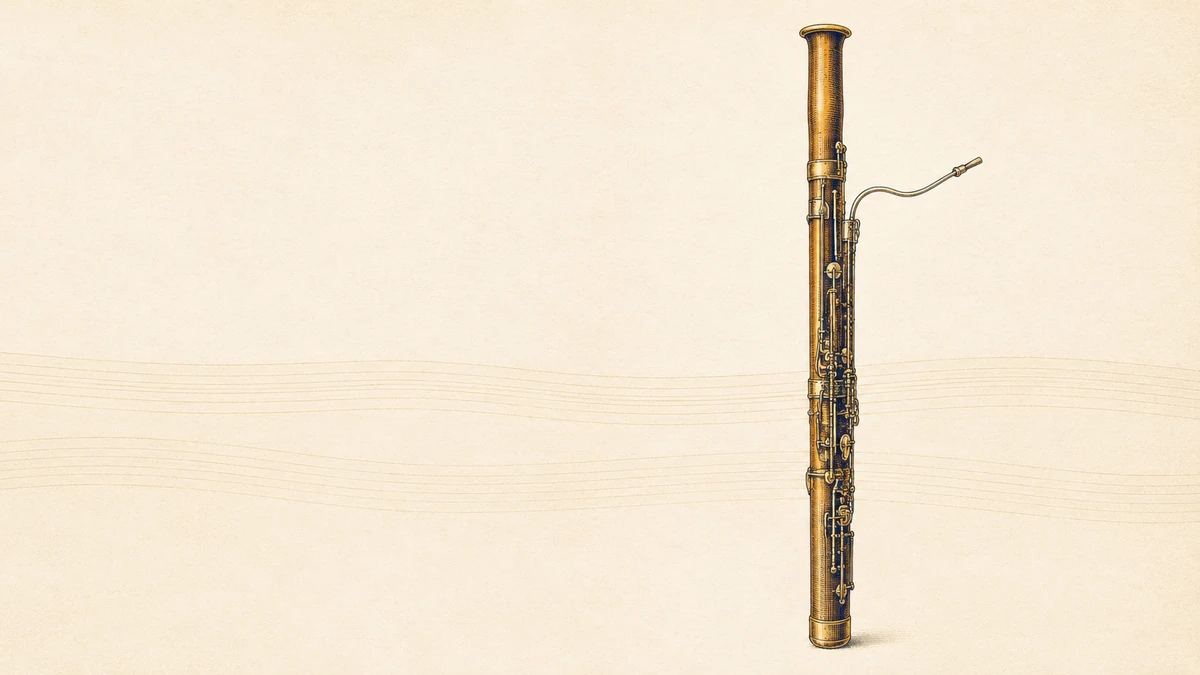
Master the flick — most cracks are not your fault
The notes that crack most readily on the bassoon — the A on the top line of the bass staff and the B-flat, B and C just above it, and at times the D — are not evidence of weak playing. They are simply how the instrument behaves, and there is a precise remedy. It is called flicking: as the note begins, you give the correct left-thumb key a brief touch, on and straight off again, opening a small vent that lets the reed settle onto the note you want rather than dropping to the octave below. While a passage is new, flick on every one of those notes; once it is secure you can judge where it is no longer needed. One trap catches players unawares — leave the whisper-key lock engaged and it works directly against you, bringing back the very cracks in that register you were trying to prevent, so always know whether it is on.
Start the note as a release, not an attack
Much of the bassoon’s cleanliness is decided in the first instant of a note. Picture that instant as the moment you let already-moving air reach the reed, rather than as a stroke of the tongue against it — the breath is prepared and waiting, and the tongue simply lets it through. When a note keeps cracking, aim the tongue at a corner of the reed’s tip instead of its centre. Those two habits resolve more split notes and ragged slurs than any amount of extra force.
One instrument, several voices
The bassoon’s range is broad, and its upper register is notated in the tenor clef — and, in the highest passages, occasionally the treble — which can trip you if you spend most of your time in the bass. Read every clef until none of them slows you, and give the high register its own study: every register of the bassoon calls for its own voicing — a subtly different setting of the mouth and throat — to sit in tune and in character, and the top notes repay that care far more than they repay brute force.
Following the bass — and stepping out of it
For much of the time your line moves with the cellos and basses, so much of bassoon playing is listening downward and matching them in pitch, length and weight. Then the writing hands you a solo, often exposed and sometimes wry, and you become the voice everyone follows. Practising with the strings and the rest of the orchestra around you teaches both jobs at once; the bare part teaches neither, because it never tells you which one you are doing.
A word on auditions
Bassoon excerpts run from the deep, blending bass lines to the famous exposed solos at the top of the instrument, so a panel is really testing two players in one sitting: the one who blends and the one who leads. Practising the excerpts as they sit in the music, against the orchestra, prepares you for both the blend and the exposure in a way an isolated line never can.
Related guides
More from the woodwind family: clarinet, flute and oboe. Or return to the Guides hub.
This is the kind of practice MaestroMeet was built for. You play your part with the score scrolling in front of you and the rest of the orchestra around you, so your entries, your tuning and your timing have something real to fit into. On the Premium plan you can choose which parts appear on the scrolling score — calling up the lines around you to see exactly how yours fits — and you can quiet your own line, the minus-one, so you step into the part yourself with the orchestra still playing. MaestroMeet is opening soon — join the waitlist to be among the first to play.
Join the waitlistRaise your instrument and play.
Know a bassoonist who would find this useful?
Please pass it on. The guide is free, there is nothing to sign up for, and every musician it reaches is one more reason to keep the music flowing.