How to Practise the Orchestral Oboe at Home
The most useful way to practise an orchestral oboe part at home is to play it with the rest of the orchestra around you, not alone. The oboe is the instrument the whole orchestra tunes to — the A you give at the start sets everyone — and that tells you most of what you need to know about its life: it is exposed, it often leads, and its pitch matters to every player in the room. None of that context exists when you practise the line on its own.
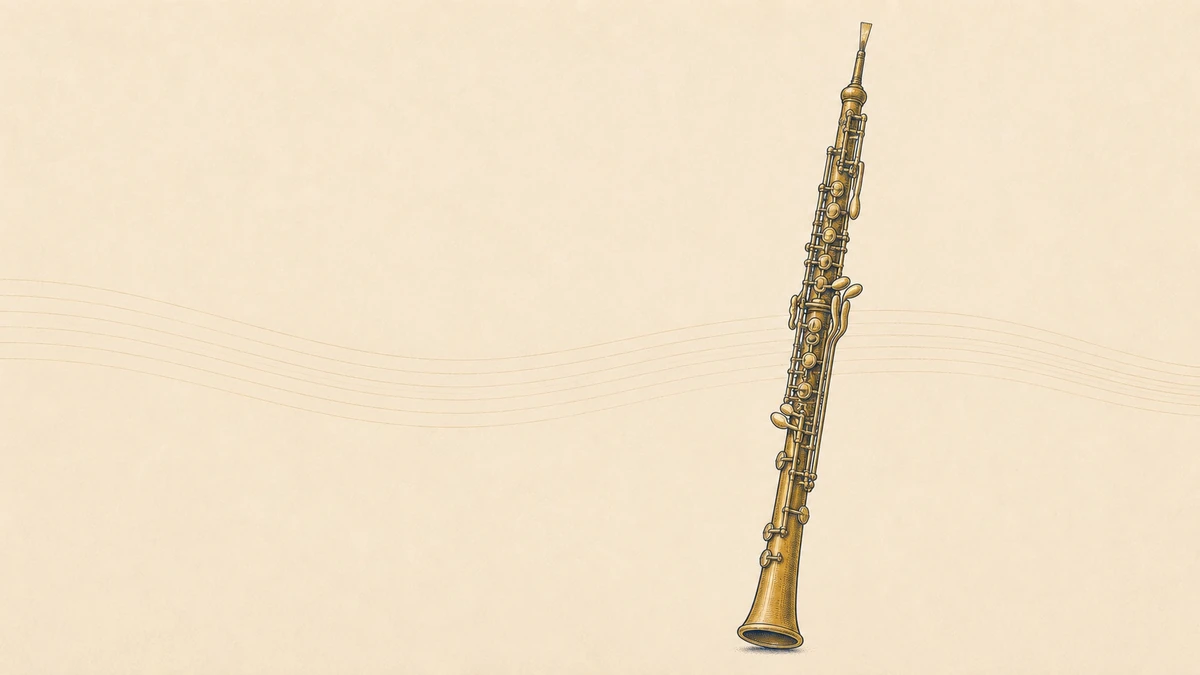
Listen to the reed before you blame yourself
More than any other player, the oboist is at the mercy of the reed, and much of what feels like a playing problem is really a reed problem. Learn to read its crow. Take the reed by itself, draw it a touch deeper between the lips than your normal playing position, and push air through it. A reed in good health answers with a rattly cluster of pitches gathered around a C, sounding in more than one octave at once, with low, middle and high all present together. If that answer is all top and no bottom, or stuffy and slow to speak, it is the reed rather than your technique telling you it needs easing or replacing. Two minutes spent reading the crow before you start can save an hour spent wrestling a reed that was never going to give.
Keep the lips flexible
It is easy, particularly when tired, to clamp down on the reed, and a clamped embouchure cannot tune. Begin your practice instead by sounding the reed on its own and easing it gently in and out with the lips alone, listening to the pitch slide up and down as you go. That slide is impossible if you are gripping, so the exercise both releases the lips and hands you the flexibility you will lean on later — to coax the upper register into tune, and to drop cleanly to the lowest notes.
Tune from the A, and tune by ear
The A near the middle of the range is the note the whole orchestra takes from you, so know exactly where it sits on today’s reed and use it as the anchor against which to weigh the others. In the orchestra, though, resist the pull to lock onto the tuner when the players around you have drifted sharp or flat together — an oboe that is ‘correct’ while everyone else has moved is the one that sticks out. Carry a clear sense of your own pitch tendencies and of how today’s reed sits, and tune by ear to the room.
Breathe out, not only in
The oboe uses very little air, which sounds restful and is not. The difficulty is the opposite of most instruments: in a long phrase you can run short of room to breathe in while still holding stale air. Plan where you will let air out as deliberately as where you take it in, so a long, exposed line stays even all the way to its end.
A word on auditions
Oboe excerpts ask for a singing, exposed line, secure intonation and clean entries under pressure — the very qualities that make the instrument the orchestra’s reference. Practising them as they sit in the piece, with the players around them, is the nearest thing at home to the audition itself, because it is the agreement with those players that a panel is really listening for.
Related guides
More from the woodwind family: clarinet, flute and bassoon. Or return to the Guides hub.
This is the kind of practice MaestroMeet was built for. You play your part with the score scrolling in front of you and the rest of the orchestra around you, so your entries, your tuning and your timing have something real to fit into. On the Premium plan you can choose which parts appear on the scrolling score — calling up the lines around you to see exactly how yours fits — and you can quiet your own line, the minus-one, so you step into the part yourself with the orchestra still playing. MaestroMeet is opening soon — join the waitlist to be among the first to play.
Join the waitlistRaise your instrument and play.
Know an oboist who would find this useful?
Please pass it on. The guide is free, there is nothing to sign up for, and every musician it reaches is one more reason to keep the music flowing.